Wildcards









Building upon the previous thematic chapters, this wildcard chapter offers a broader perspective by sharing a variety of emerging and potentially disruptive trends (the wildcards) to inspire the SURF cooperative.
Our society is built upon an important starting point – the human. With advancements in quantum, connectivity, and AI technologies, it’s imperative to reflect on how these and other technologies will affect us as individuals. A society without healthy individuals – both physically and mentally – is one destined to underperform and feel less well connected to society and each other. Over the past 100 years, antibiotics, robotic surgery, and diagnosis technologies (such as MRI or CT scanners) have enhanced our ability to treat a multitude of physical conditions. This trend of innovation in human healthcare continues unabated.
According to a recent study, almost 800,000 people # in the Netherlands have had either a replacement hip or knee joint. Smart implant technologies will augment future hip or knee joint replacement performance, longevity, and the quality of mobility for individuals.
Technologies facilitate new experiences, and brain-computer interfaces (BCIs) – which consist of sensors to measure brain waves – will help people to interact with technologies whether to relax or in healthcare settings. Exoskeletons controlled by BCIs have been piloted, and look set to change the mobility possibilities for those with spinal cord injuries.
mart implants and BCIs for exoskeletons focus on the physical health of the individual, but it’s also imperative to consider well-being in this age of new technologies. BCIs can control technologies to enhance mobility, but they can also help those with locked-in syndrome to communicate with the world around them. Yet, as we immerse ourselves ever more in such cyber-physical technologies and the online world it’s imperative that protocols are in place to promote and support proper digital well-being. The individual needs both a healthy body and a healthy mind.
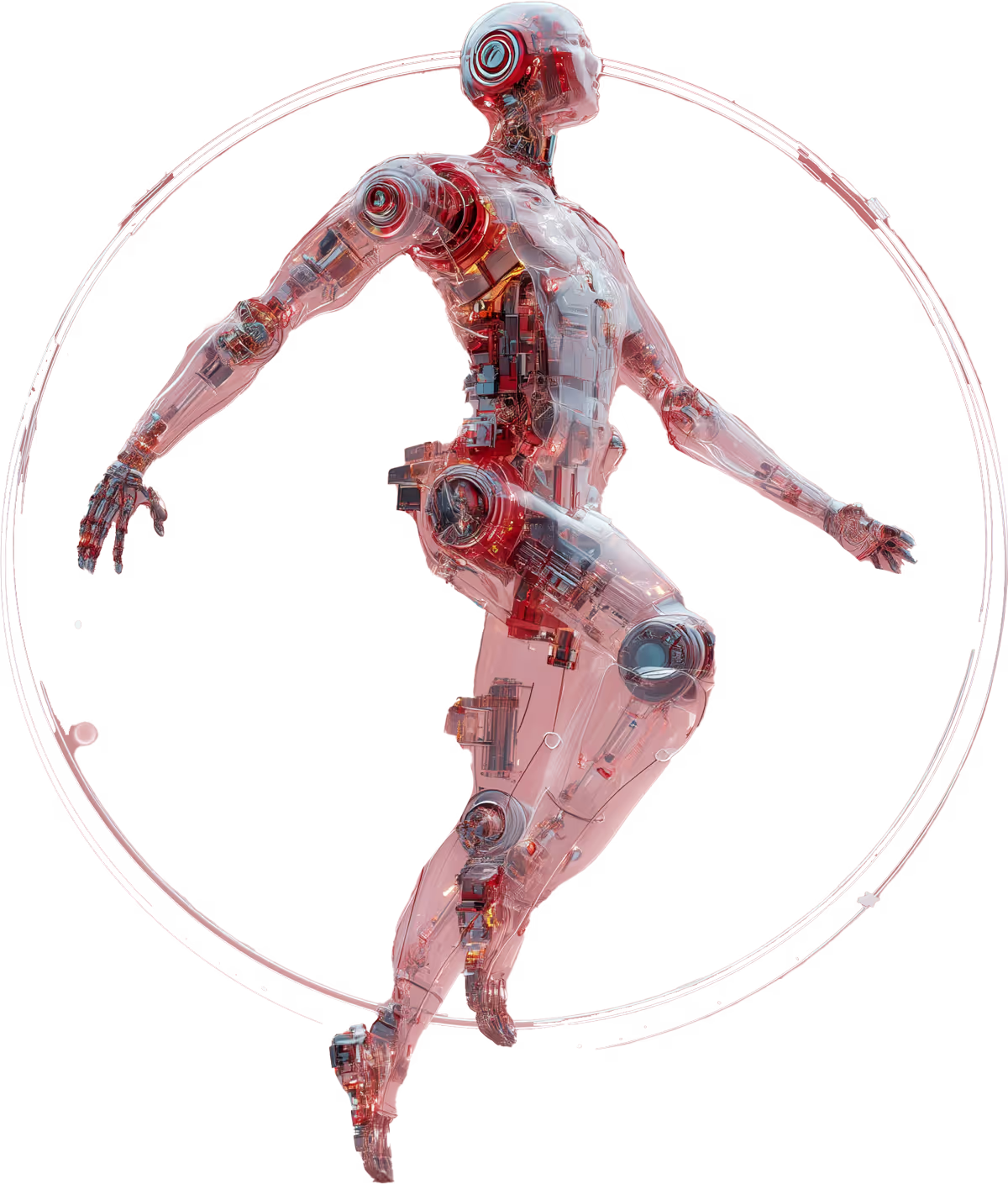
In a world designed for and by humans, it’s not surprising that humanity would create robotic technologies in their own image. Humanoid robots – robots that look like humans in shape and form – will be used in industrial production and work in environments too harsh for the fragile human body. Mass deployment in society is some time away, but the humanoids are coming.
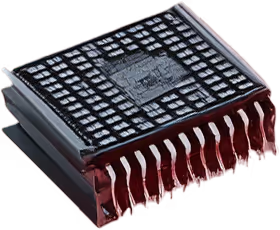
For such human-focused technologies to develop and emerge in the European context, advancements in computing platforms are required. With the geopolitical landscapes constantly evolving, Europe needs chip competitiveness right at the doorstep of technological progress. Without reliable and advanced computing chips, our ability to enhance society for humanity including nature will stall.